
Walking takes us where we’re going and is one of the simplest methods to maintain our fitness levels. Because we spend so much time on our feet, periodic aches and pains are typical, particularly after prolonged walking.
While overuse is a major cause of foot discomfort, an underlying injury or medical condition may also make walking painful.
“If you’re having sore feet when you’re walking, see your doctor to rule out any medical conditions that might be contributing to your discomfort,” says Daniella Levy, MD, a board-certified podiatrist with the Podiatric Physicians Association of Illinois.
Your sports medicine physician can perform appropriate foot and ankle diagnostic screening tests to assess your current walking biomechanics and assess for possible lower limb injuries.
Causes Of Foot Pain While Walking

When your feet are sore after walking, you might think it’s just the weight of your body on your foot. But there are other reasons you might be experiencing foot pain when walking – here are many causes of foot pain while walking.
The foot is made up of several microscopic bones that may cause substantial discomfort if they get broken or misplaced or if the protective padding that surrounds them degrades.
Numerous conditions may damage the foot, resulting in discomfort that intensifies with each step.
We will explore some of the possible reasons for foot discomfort when walking in this post, as well as how to cure them.
Plantar fasciitis

Plantar fasciitis, the inflammation of the plantar fascia, is a common cause of heel pain in runners. The plantar fascia located on the bottom of your foot connects your heel bone to your toes and helps support your weight. Unfortunately, this network gets strain from continuous use, leading it to degenerate over time. Plantar fasciitis is most prevalent among people who are obese or have flat feet due to structural abnormality.
Plantar fasciitis symptoms will initially show up in the form of heel pain. You may feel a sharp, shooting pain when you touch your heel or a dull ache in your arch. After your symptoms continue to worsen, you will notice symptoms such as foot numbness and discomfort in the morning when you wake up and heel spasms that will result in pain on standing and moving around. If you experience these symptoms, do not go back to doing activities that cause plantar fascia symptoms again.
Plantar fasciitis is not a disease but is the result of excessive strain and stress on the plantar fascia, often caused by repeated stress or activity. Incorrect footwear such as high heels or shoes that do not offer enough arch support can cause plantar fasciitis due to how they place weight and pressure on the heels. Other causes of heel pain include leg and foot misalignment resulting in calf muscle strain and inversion ankle sprain.
For the best possible result for your plantar fasciitis treatment, it is important that you choose a treatment that is highly effective and does not pose any health risks. If you have chronic plantar fasciitis, you must be willing to change your lifestyle habits and modify your footwear in order to achieve a long-lasting result.
Morton’s neuroma
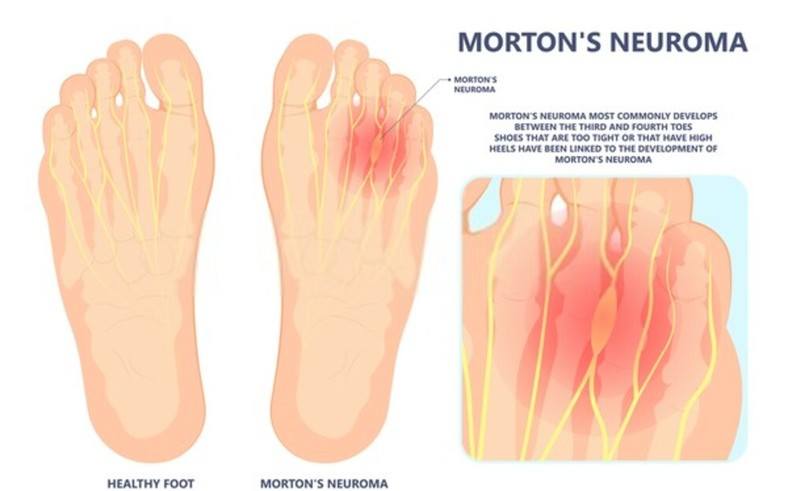
Morton’s neuroma (also known as Morton’s metatarsalgia) is a common disorder that affects the nerves in the ball of the foot. It is caused by pressure on one of three nerves at the top of the foot, which results in pain and numbness near or around where this nerve leaves under the ball. The condition is usually benign, but it can cause permanent damage to the nerve if not treated.
Morton’s neuroma is named for Dr. William B. Morton, founder of the American Society of Surgery in Foot and Ankle, who first identified the disorder in the mid-1800s. The exact cause of Morton’s neuroma is unclear, but it may be caused by excessive pressure on the nerve that runs under the ball of the foot.
The disorder affects about 2% to 6% of the population, with women being more frequently affected than men. The condition usually presents in people between the ages of 30 and 60 years old.
The first possible symptom is pain in the ball of the foot, which may be described as a dull ache or intense burning sensation. The pain typically awakens an individual at night. Numbness in the toes may also develop.
As the condition progresses, walking becomes difficult; pressing on the ball of the foot causes increased pain. At this point, an individual may notice that raising up on their toes relieves some of the pressure on the ball of their foot and alleviates pain.
Individuals with Morton’s neuroma often experience numbness along with burning in the ball of their foot, especially after long periods of inactivity, when weight is placed upon it or when pressure is put on it.
Metatarsalgia
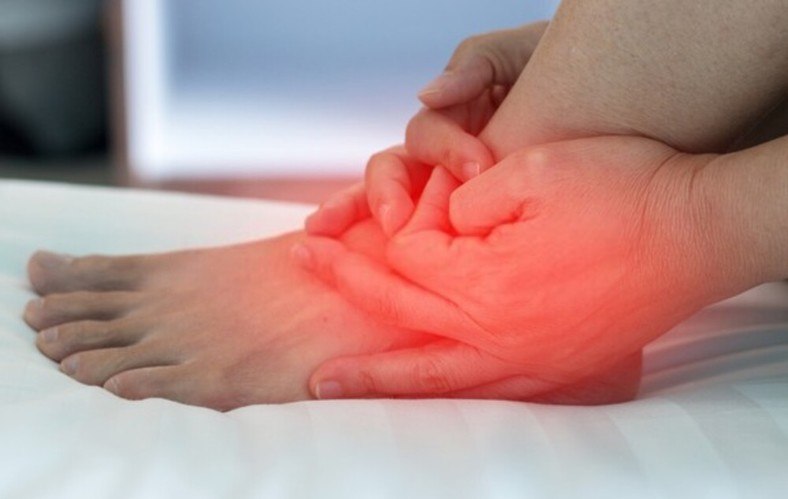
Metatarsalgia, also known as “ball of the foot pain,” is one of the most common foot conditions that afflict people. It can stem from a variety of causes, including tight calves and arches, pulled muscles in the leg or back, or just simple strain to muscles and tendons.
It can be difficult to treat metatarsalgia treatment on your own. That is why consulting with a podiatrist is always recommended for this type of ailment.
Metatarsalgia is often characterized by an intense throbbing and burning sensation in the ball of the foot. Additionally, it might result in numbness or tingling in the toes, as well as the sensation of an item, such as a stone, being within the shoe.
Typically, the pain is felt in the ball of the foot, immediately beneath the toes.
This disorder has a strong resemblance to a number of others, including Morton’s neuroma. A doctor may order an X-ray to rule out the possibility of a stress fracture or other underlying reasons.
Tendinitis
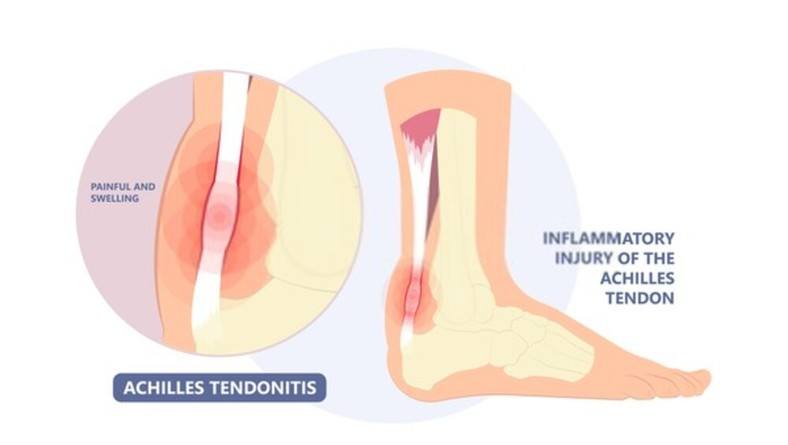
Tendonitis is a condition in which a tendon becomes inflamed. Tendons are fibrous strands that connect muscles to bones.
Symptoms vary according to which tendon is involved. Pain and stiffness are the most prevalent symptoms, which progressively intensify with sustained activity.
Several different types of tendinitis may affect your foot, including the following:
– Achilles tendinitis is a condition that results in pain and stiffness along the Achilles tendon and discomfort at the back of the heel.
– Extensor tendinitis is a condition that produces discomfort in the middle region of your foot’s top.
– Peroneal tendinitis is a condition that produces discomfort in the back and outside of the foot.
Turf toe
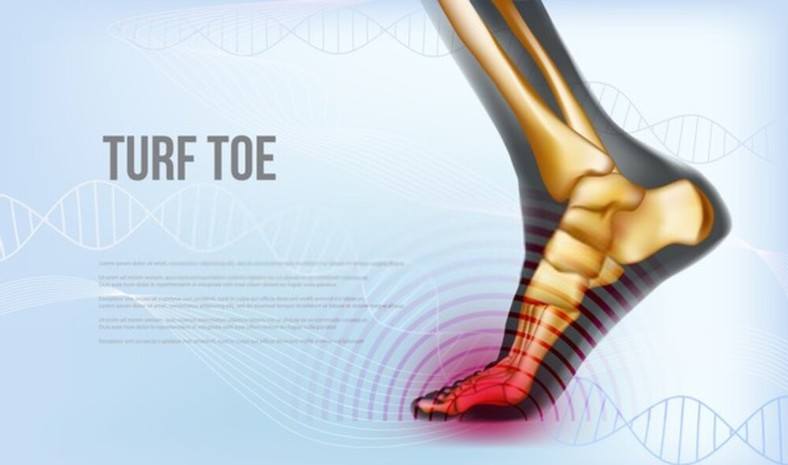
Turf toe is a big toe sprain. When the toe is hyperextended, as it is often in a push-off posture, the discomfort is exacerbated.
The illness is characterized by discomfort and stiffness, particularly in the big toe. Additionally, some individuals may have edema and bruising.
A physician will perform a physical examination during which they will likely concentrate on the toe’s range of motion. The joint effusion may be present, and the examination will likely cause the joint to go into a flexed position, which can exacerbate discomfort and pain.
The diagnosis is usually straightforward, as the symptoms and clinical examination findings are characteristic of a sprain of the first metatarsophalangeal joint. There is localized swelling on the top of the foot around the location of the metatarsophalangeal joint, and toe movement is limited.
Hallux valgus
Hallux valgus, often known as bunions, arises when the anatomy of the foot alters, with the big toe leaning toward the other toes. This misalignment results in the appearance of a hump or bony protrusion on the inside of the foot at the base of the big toe.
A person may have a burning feeling in their foot, as well as redness, edema, or numbness.
When a person wears shoes, the discomfort might get greater, especially in the big and second toes.
A doctor may diagnose a bunion simply by looking at the foot. They may, however, sometimes recommend an X-ray to ascertain the degree of the bunion’s alterations.
Heel pad atrophy
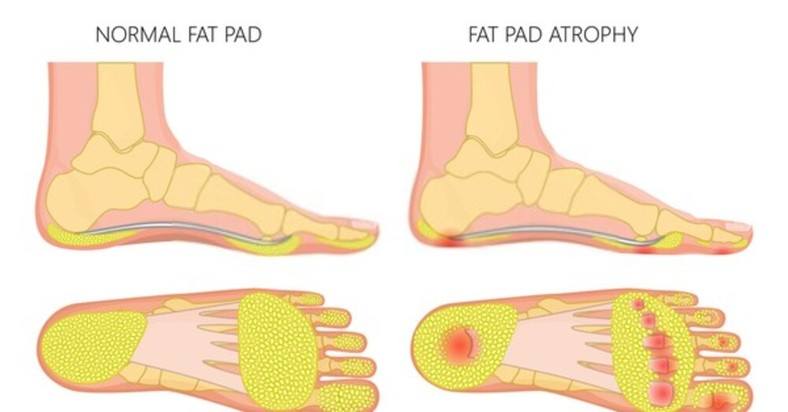
This problem develops when the protection pad on the bottom of the heel begins to atrophic or contract. As a consequence, when a person walks, their heel bone may strike the ground more often.
Heel pad atrophy may result in discomfort, burning, and the formation of a callus on the heel, which is often the location of the pain.
Doctors may evaluate the disease using a mix of physical examination and imaging investigations.
Heel pad atrophy occurs when the first layer of skin on the bottom of a person’s heel deteriorates or begins to atrophy. The skin is protected and covers an area of the bone called a cuboid. As soon as this layer of skin begins to contract, it produces more friction against the ground, which results in pain.
The disease is common in middle-aged and elderly people.The cause of the disease is unknown, though it appears to be hereditary and affects women more than men.
Heel pad atrophy is most commonly found in the elderly population. A person’s risk of developing it increases with age. One reason for this may be weakened bones with age, resulting in less cushioning for the heels when a person stands or walks.
Arthritis
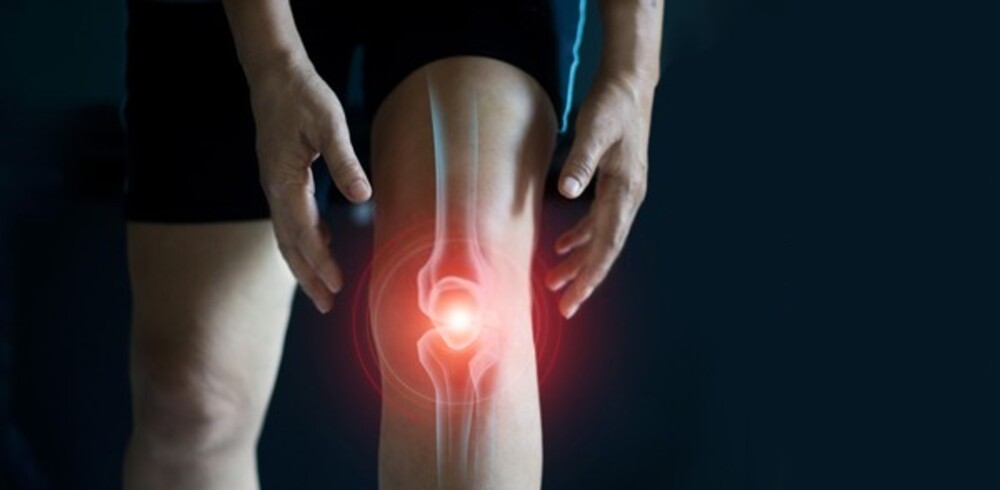
Arthritis can be a crippling condition that debilitates sufferers by limiting certain activities and resulting in pain. The signs and symptoms of arthritis vary depending on the type but may include joint pain, stiffness, swelling, tenderness, and sometimes a feeling of warmth or constriction in the joints. In short, it is a condition that often results in chronic pain for people.
Arthritis affects people of all ages. According to the National Institutes of Health, arthritis affects more than 30 million Americans at any given time, while more than 27 million Americans suffer from chronic pain due to the condition. And while some people are afflicted with one form of arthritis, others may develop multiple forms or experience symptoms from other types of conditions or diseases.
Osteoarthritis may deteriorate the protective cushioning in the bones of the feet, resulting in toe, heel, and foot stiffness.
Rheumatoid arthritis is an autoimmune disease that wreaks havoc on the feet’ cartilage, ligaments, and tendons. This injury may manifest itself in the form of discomfort, swelling, warmth, and redness.
Arthritis may affect the toes, ankles, balls of the foot, and heels.
The cause of arthritis is not well understood, but it appears to be caused by an autoimmune reaction in which the body’s immune system manufactures antibodies that attack its own tissues. These antibodies attack cartilage, a central component of joint cartilage. This constant attack on cartilage weakens it and causes it to become damaged and more prone to injury as well as tenderness. The result of the damage is that the person’s joints become stiff, inflamed, painful, and swollen.
Arthritis can develop at any age, but it is most common among adults over the age of 50, with 35 percent of those older than 65 experiencing some form of arthritis.
Heel spur
A Heel spur is a bony protrusion at the back and outside of the heel bone, which in turn causes pain in the muscles, tendons, and ligaments of the back of your leg when putting weight on it.
The heel spur is the result of the fascia breaking down, which may happen over time as a consequence of strain on the plantar fascia or calf muscles. A heel spur can be exacerbated by weight gain and pregnancy. People with flat feet are more likely to develop this painful condition.
A Heel Spur can also form as a benign bony growth in response to pressure from poorly fitting shoes. When this happens, it is usually accompanied by calluses or corns on the bottoms of one’s feet.
Heel pain, edema, and redness are all symptoms of abnormal bone development. Certain individuals may have discomfort as a consequence of plantar fasciitis.
The discomfort is frequently concentrated in the heel and occurs when walking, jogging, running, or indulging in other sorts of physical exercise.
To diagnose a heel spur, a doctor will take an X-ray of the heel or foot.
When To See A Doctor
If a person has any of the following symptoms, they should see a physician:
– Foot malformation that is visible
– Excruciating pain when walking
– Pain that makes regular tasks difficult
– Foot edema and redness on a frequent basis
A physician may do a physical examination and provide recommendations on therapies that may help increase a person’s physical activity level. Sometimes, physicians also prescribe orthotic devices to assist in daily activities.
If pain persists for months, a podiatrist may recommend surgery. Because the pain is likely due to stress on the bones or joints of the feet, this type of procedure is sometimes successful in relieving foot pain. Surgery for heel spurs is one example. Another might be osteotomy to reposition bones in the foot to relieve pressure on nerves.
If patients are diagnosed with diabetic neuropathy, they may be given oral medications to help manage the symptoms of numbness and tingling in their feet.
How To Relieve Sore Feet After Walking All Day
Whether you’re traveling for an active adventure or urban exploration, a fundamental objective shared by all travelers is to maximize each day. After all, you only have a limited number of vacation days and have flown to an unusual destination – you want to maximize your experience.
However, there is no disputing that walking about all day has one disadvantage—tired and aching feet. A full day of traveling, touring, and walking is certain to wear you out.
If you’ve ever wondered how to relieve foot pain so you can wake and face the day’s activities, we’ve got you covered. Here are some pointers on how to alleviate your pain!
There are a lot of different things that can cause foot soreness, and no one knows exactly why our feet hurt. However, there are a few ways to help relieve your pain, including:
Stretch Your Feet

Obviously, you’re not going to reach over and grab your toes while you’re walking about your day. However, if you begin your day by stretching your feet, it will help to loosen the muscles and joints in the foot, as well as work as a preventative measure to ensure that you don’t experience sore feet later in the day.
There are a lot of different things you can do here, depending on how flexible you are.
Stretching your muscles is one of the most effective strategies to ease discomfort in your feet. You may begin with a two-minute stretch from the tip of your toes and work your way up to your legs.
As the last stretch, you may force your feet against a wall.
Put Them Up
Many people advocate elevating your fatigued feet to reduce swelling, which also aids in muscle repair. Some even recommend elevating your feet above heart level after a long day of walking.
A more conservative option is simply to take a seat where the floor level is the same as your feet. As an example, if you have sore feet from standing, you might feel better by sitting down in a large chair with legs at the same level as your feet.
We propose erecting your feet 30 degrees above your head. At night, while sleeping or reading, you may prop it up on your luggage or a stack of pillows.
Foot Massage

Massage is the finest method to reduce the discomfort of weary and painful feet, and hopefully, you won’t wake up with heel pain!
You can generally get a professional foot massage at your resort or hotel, but if this is not an option for you, there is one method you may try – take a tiny ball or any hard round item and roll it beneath, around, and up the top and sides of your foot, all the way to your ankles.
This allows you to break up the small fascia and muscles that have been constructed as a result of continual walking.
Soak Them
Not all options are viable for everyone, but soaking your feet in the water is one of the most effective. If you’ve ever seen anyone with sore feet, chances are they’re taking a bath or shower, and it’s likely that the water is very hot.
This process loosens any tight or constricted muscles, allowing them to restructure and heal. The heat from the water may also be very comforting as it has a relaxing effect on a sore body.
In a bowl, combine warm water and aromatic oils. These oils may help alleviate foot pain and can also be used to treat a variety of other foot ailments. Heel that pain.
You may use tea tree oil (antifungal and antibacterial), lavender oil (calming and relaxing), peppermint, chamomile, and eucalyptus oil (refreshing).
If you don’t have any essential oils on hand, you may always go for the simplest solution — a hot and cold foot bath. In one dish, put warm water; in the other, place cold water. 2 minutes in hot water, 2 minutes in cold water.
This may seem to be a simple action, but it has the ability to open and shut the veins in your foot, therefore promoting adequate blood circulation. Circulation is beneficial in relieving painful and aching feet.
Wear Compression Socks

Compression socks are an effective alternative to elevate your sore feet. It has to be noted that it’s essential to use the right kind of socks, so always check the product description first.
Some folks prefer not wearing socks, but if you have uncomfortable feet, you may find it beneficial to put on a pair of compression socks after a long day of walking.
This can help to elevate your feet and also relieve any tension or pressure. Compression socks are available for both women and men.
Choose Comfortable Shoes
As mentioned above, the reason behind foot pain can vary. Sometimes it can be due to your shoes, so you may want to consider replacing them.
Going barefoot may not be an option because you’re likely to step on something unsavory, but there are other choices out there that are just as comfortable. Consider buying a stylish yet comfortable pair of sandals when you begin your travels for the day.
If you are prone to blisters, consider buying stronger shoes that will not cause discomfort. If you’re used to wearing boots for hiking or climbing, consider removing your socks and changing into sandals if your feet start hurting.
Therefore, if you wish to prevent or reduce foot discomfort when traveling, it is essential that you wear comfortable shoes. This way, you may go further, quicker, and painlessly!
Avoid wearing high heels when traveling abroad (or all together!). These have a detrimental effect on the tendons and ligaments in your knees, and you will almost certainly awaken with heel pain.
Summary
Walking is the most widely used form of transportation around the world. It is easy to see why so many people feel attached to it. Walking appears simple because it is so natural, and many people do it without much thought. But walking is an incredibly complex activity, requiring you to coordinate your steps with your brain signals traveling through your nervous system, even as you adjust your pace and mental focus because of your surroundings.
However, this act becomes much more challenging if you experience pain while walking.
Numerous medical conditions might result in discomfort that manifests as pain while walking.
These disorders affect the big toe, all toes, the heels, or the ball of the foot.
If the pain becomes chronic and begins to impair a person’s everyday activities, they should see a physician or orthopedic expert.
FAQs
What helps sore feet from walking all day?
Coldwater and a frozen bag of peas
Ice Water – when the water is ice-cold, it produces a cooling effect on the nerves around, which can help reduce inflammation and pain.
A Frozen Bag of Peas – when you put an ice vial containing peas in, it also helps to decrease swelling in your feet and ankles. Putting the bag down for at least 10 minutes gives amazing relief from soreness in your feet.
Can walking too much hurt your feet?
Yes, it can hurt your feet because if you walk for a few hours, your feet get tired, and it starts to swell, and you may feel pain.
Do your feet get used to walking all day?
No, they don’t because if you walk too much without a break, your feet will get sore, and then no matter how much you walk, it will still feel sore.
Can have uncomfortable shoes after walking all day cause pain?
Yes, it could cause pain to your feet because if you are wearing uncomfortable shoes, your feet will start to hurt.
What is better for sore feet, Ice or heat?
Both Ice and heat can help to relieve soreness in the feet. If only a small part of the body is aching, heat will usually provide more relief than Ice. When a larger area is affected, Ice may be your best bet.
How do I get rid of inflammation in my foot?
Take a bath with Epsom salts or mustard oil. Apply an anti-inflammatory ointment on the inflamed area. Wear comfortable shoes whenever possible. Get enough rest.
How to decrease swelling in your foot?
Drink more water, especially water with high mineral content, to flush out excess fluids from your circulation system. Avoid salty foods and also avoid standing or sitting for long periods of time because this will increase the amount of fluid that is being retained in the body, which will increase swelling in your foot.
What makes the bottom of your feet hurt when you walk?
Prolonged walking on a hard surface without a break can cause the plantar tissue in your feet to start to be sore. If you have a job that requires you to walk all day, remember to take frequent breaks from walking and do some exercises with your feet so that you can reduce the amount of pain associated with standing for long periods throughout the day.
How do I prevent my feet from hurting after I walk?
You can prevent soreness in your feet by wearing proper shoes that fit your foot properly. You can also spend time massaging the area with lotion.
What are the best socks for my feet?
To prevent blisters, you should use socks that are moisture-wicking because if they absorb sweat, they will be less likely to cause blisters. Choose socks that are made of seamless material because it is lighter and it helps to keep your feet cool. Socks that contain cotton fibers also help to keep your feet cool and dry.
What does it mean when your feet hurt when you stand up?
Pain in the feet after standing for a long time is a common phenomenon. If you feel pain in your feet on and off, it could be a symptom of a more serious condition. Standing on your feet for a long time puts a lot of pressure on them, causing swelling and weakening of muscles which could lead to pain or even more serious conditions such as deep vein thrombosis(DVT).