
In fact, there are so many different types of gender identity, making some confused about their true gender. So, this article will assist you in figuring out your real gender identity.
Gender identity refers to how an individual feels about their sex and who they perceive themselves to really be. In fact, there are several more than two widely known sexes. Even though, in our daily life, we often see the fact that in our culture that the most identified sexes are women and men, which are also typically referred to as the sex binary. Besides, they are generally focused on somebody’s physiology. For those who don’t know, it is often known as sexual organs that they were brought into the world with.
Sexual identity allocation is founded on the hypothesis that somebody’s sexual organs correspond to their sex. Sex, on the other hand, refers to what somebody perceives themselves to be rather than their anatomical structures. So, to give you a few instances of this definition, female, male, agender, third gender, two-spirit, genderqueer, gender fluid, transgender, non-binary, pangender, and everything, nothing at all, or a mixture of these, are all possible gender identities.
There are, in reality, far more gender identities than those mentioned here. Sex could really be complicated, and as we obtain a greater understanding of personalities, folks are specifying themselves in radically different ways, typically as society becomes more and more open to the LGBTQ+ community. Even so, a few concepts might have various implications for various individuals, depending on various elements that affect them.
In addition, there are usually specific words that people prefer not to utilize or refer to themselves. Besides, there are still a lot more definitions that they prefer to use or consider themselves. When you are not really certain what to call someone, it is always recommended that you ask them first what they want to be considered or called. It is constantly our choice, not others, as to how we recognize and convey our sex. Whatever you start deciding or recognizing is worthy of consideration and support.
So, in this blog post, everything related to gender identity will be clearly explained so that you will have a deeper understanding of this topic. As a consequence, the path to understand yourself will also be easier. Let’s get started!
Key Takeaway
- Gender identity, in fact, is not necessarily the same as physical gender, nor is it constantly the same as presumed sex-related on identified gender. It is, in fact, determined by how they recognize themselves as an individual.
- Gender identity, accordingly, could also shift as time passes.
- Individuals could always describe themselves as more manly, more feminine, a mixture of the two, or maybe none of the above mentioned. In the end, a folk’s sex expression or description is unique to them.
So, What is Gender Identity?
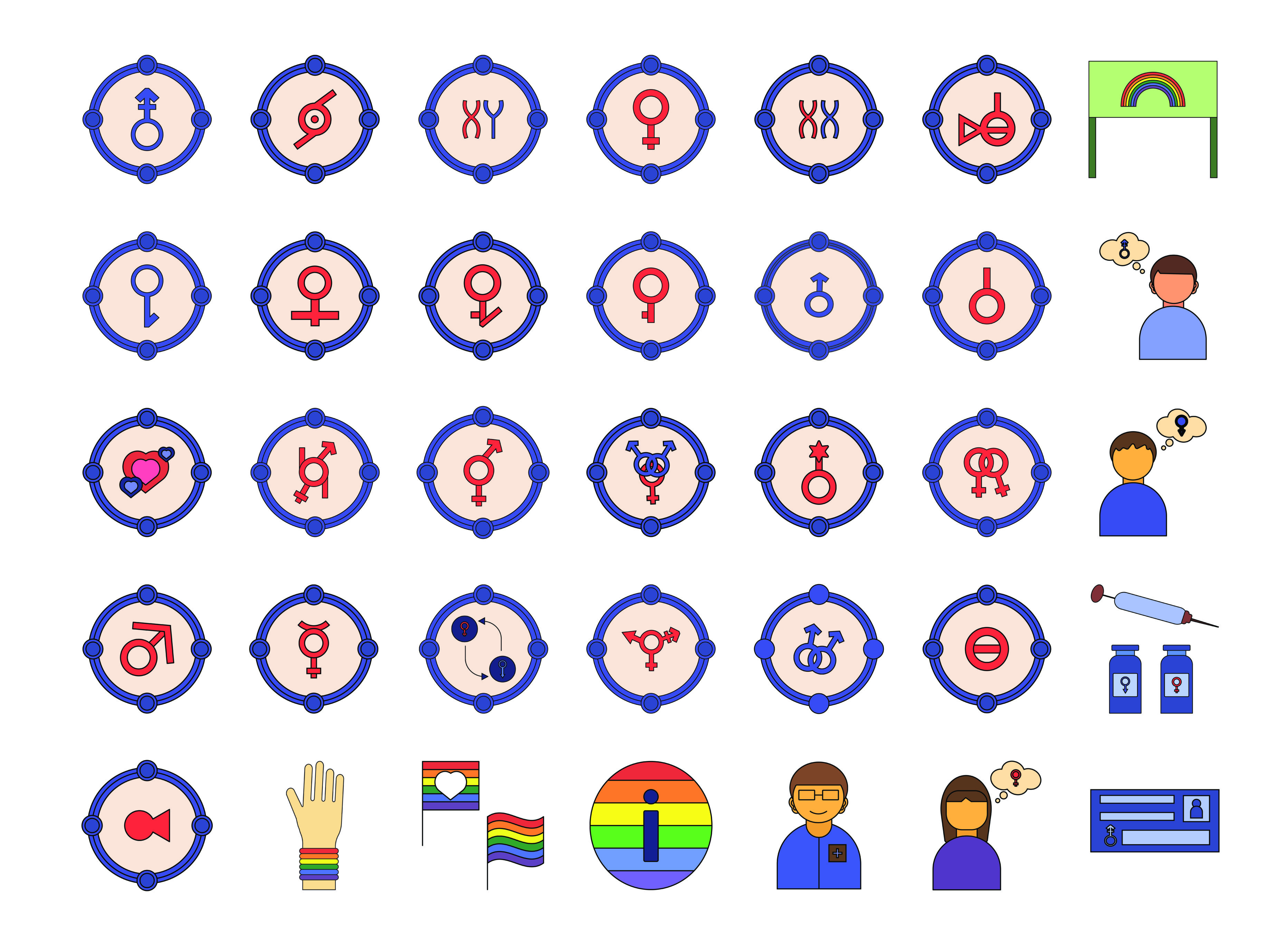
Caption: Gender identity through different icons via Shutterstock.
Gender identity, in general, relates to a person’s subjective understanding of his or her own sex.
Since a folk’s gender identity and sex are not required to be the very same, it is critical to understand the distinction. But don’t be in a rush. Take your time to understand yourself gradually.
Gender
Image source: https://www.shutterstock.com/image-photo/man-woman-holding-black-balloon-boy-1558751909
Caption: what is gender via Shutterstock.
Generally speaking, sex is how a folk identifies from within and expresses this from outside. Individuals can demonstrate their sex identity through garments, visual appeal, and behavior patterns. But this is not always truly the case for everyone.
Gender, according to the World Health Organization (often known as WHO), is a socially constructed category that individuals commonly define when it comes to masculine and feminine. In Western societies, womanhood is associated with females and maleness with males. Even so, this societal construct differs all over cultural contexts. And sometimes, it even varies in a very small community.
Gender, on the other hand, is not easily integrated all along the binary boundaries of females and males. In fact, it is a little bit complicated.
Sex
An individual’s sex is usually determined by genetic differences, for instance, reproductive system, genetic mutations, and hormone levels. In other words, by looking at these factors, you might decide your own sex.
Sex, just like gender, is not really binary. It is a little bit confusing, right? Let me explain in more detail. So, an individual might have the genetic traits associated with being either a woman or a man. Having said that, their sexual organs, genital area, or both might appear distinctive.
And this is typically referred to as sex development distinctions. In other words, intersex is another term for distinctions in sex development.
In reality, you might often see different words, such as male, female, or intersex. In fact, these are among commonly used words to describe a folk’s sex.
What is the background of gender identity?
When our understanding of gender shifts, so do the terms and ideas that relate to it.
For those who don’t know, the phrase “gender identity” was initially published in the 1960s. It relates to an individual’s inner feeling that they belong to either female or male gender categories. Even so, individuals who express themselves in other ways were eventually included in the word. It pertains to an individual’s own feeling of sex, irrespective of the gender designated to them by a doctor during babyhood.
A few words, for instance, “transsexual,” have changed over the years. Previously, this word just applied to individuals who had undertaken specific medical treatments, for instance, a lumpectomy or bottom surgery.
However, the definition of transsexual has since expanded to include folks who are transitioning to or have a gender identity other than the one they were given at birth. Let’s say, if you were born a girl, but you recognize yourself as a boy, you can also use the word transsexual to describe yourself even if you haven’t had any genital surgery.
When it comes to social acceptance, other cultures have evolved. Traditionally, the word “queer” was utilized as a derogatory term for individuals who did not adhere to gender interpretation or identity preconceptions. A few folks nowadays, having said that, have recaptured it. It may be appropriate in certain situations but inflammatory if used incorrectly.
In addition, it is exceptionally crucial to remember that gender identity cannot be classified. Labels can assist individuals in comprehending their own identities. Having said that, you don’t need to use labels all the time as gender identities are not necessarily categorized in this way.
When folks begin to comprehend their gender identity in brand-new and different ways, they could discover that no specific term adequately describes it. Alternatively, they might also be recognized in a variety of ways.
Sexual Orientation Compared to Gender Identity
Image source: https://www.shutterstock.com/image-vector/sexual-orientation-vector-icons-set-gender-311194088
Caption: Sexual orientation vector through icons via Shutterstock.
You are, as you might all know, not alone in this path to understand yourself, even if you are perplexed by the phrases and terminologies that surround the topic of gender identity. The most important fact to notice is that gender is distinct from morphological sex as well as sexual orientation.
Gender, as per the Gender Spectrum, is how we perceive ourselves, whilst sexual orientation is who we are physiologically, effectively, or monogamously drawn to. Let’s say, if you are a female and you feel emotionally and sexually attracted to only girls, then your sexual orientation is lesbian.
Sexual orientation, as defined by the Human Rights Campaign, is basically an innate or unchanging lasting sentimental, intimate, or sexual allure to other folks. A few pieces of research have shown that sexual orientation develops on a molecular level in the uterus.
As well as, whereas an individual could really pick whether or not too involved in sexual contact with other folk, physical desire is something you are brought into the world with that you should take into account.
According to Kelly Servick of Science, in 2014, medical researchers studying identical twin boys discovered real proof of a “gay gene” by trying to identify a span on the X chromosome probably linked to homosexual activity.
Other research has discovered an even wider family member connection in terms of sexual orientation. According to Beverley Kramer and Michael Sean Pepper, scholars and authors at The Conversation, “homosexual males seem to pose a greater chance of having bros who are also homosexual.” According to family research, lesbian females tend to have more lesbian siblings than heterosexual females. But once more, this is not always truly the case for all lesbian females.
Needless to say, both homosexuality and heterosexuality do not represent the only options available. The Kinsey Scale, which has been in use since 1948, popularly categorizes sexual orientation into a 0–6 spectrum. In particular, number 0 often represents exclusively heterosexual while number six represents exclusively homosexual. Besides, you don’t necessarily need to be a math expert to recognize that there is a great deal of variance somewhere between.
What’s more, Santa Barbara, the University of California, has a detailed approach to sexual orientations. Accordingly, almost all folks are either monosexual. To make it clearer, you can understand that this implies they are only attracted to one sex, or plurisexual. To put it another way, they are allured to both sexes. There is, in fact, a broad array of sexual orientations and desires within plurisexuality and monosexuality.
Let’s check the definition of different types of gender identity and sexual orientations as well.
- Aromantic – Aromantics, unlike asexuals, do not really seek an intimate relationship with a different individual. In fact, there are only a few aromantics who crave sex but not the loving relationship that it entails. The sense of falling in love, just like an aromantic place. They do not really have that when they participate in sexual activities.
- Asexual – Generally speaking, asexual folks have no physical desire for anyone, irrespective of their sexuality. Even so, with the exception of aromantics, those who may experience a romantic connection to another individual, which is distinct from sexual interest. In addition, you can also find aromantic asexuals who do not seek romance or physical intimacy. Even so, this does not preclude asexual individuals from experiencing affection or fondness for someone else. Generally speaking, asexual people can love a close relative, a dog, or even a soul mate without seeking sexual relations.
- Bisexuality – Bisexuality, mostly abbreviated to “bi,” refers to a person who has sexual desires for both folks of their own sex and folks of another sex. As well as, since gender could really imply a range of items, bisexuality does not always refer to somebody who is sexually attracted to both females and males.
- Demisexual – In general, a demisexual individual is somebody who does not feel physical desire toward another individual until they have formed a sentimental relationship with them. This may seem perplexing because almost all individuals feel an emotional impact toward somebody who is also physically appealing. Demisexuals, on the other hand, do not develop that physiological basis until they have established a substantial emotional connection. An individual could be demisexual while being homosexual, heterosexual, or of any sexual preference. Demisexuals are quite often referred to as gray asexuals, as a lot of their interest in sex is based on emotional connection.
- Heterosexual – As the most common sexual orientation, heterosexuals are allured to the opposite sex. As such, it is no surprising fact that a lot of social standards run circles all over them. This, even so, is constantly evolving. A GLAAD analysis revealed that 2017 was considered the highest year for LGBTQ characters appearing on TV.
- Homosexuals: In general, homosexuals are drawn to individuals of their own sex. Based on a Gallup survey done in 2015, 23% of Americans are recognized as either lesbian or gay. Having said that, perceptions forward into homosexuality in the United States are shifting. According to a Pew survey, in 2001, 57% of Americans objected to a same-sex marital relationship. A significant part of Americans (62%), having said that, backed it in 2017.
- Pansexual – Basically, the term pan implies “everything.” Even though you might believe that being pansexual signifies that you are intrigued by individuals of all sexes and sexual preferences, it typically suggests that you are allured to individuals irrespective of their sexual orientation or sex. Physical desire is flexible for a pansexual, and they may be romantically linked to their own sex, the contrary sex, a transgender person, or another sort of gender identification.
- Queer – For certain folks, sexual preference does not give itself to awesome and spotless labeling. According to Santa Barbara, the University of California, Queer’ exists to serve as a catch-all phrase for all non-heterosexual, non-cisgender identities. Recognizing as queer could relieve the suspense of a defined sexual explanation for individuals who believe they could not indeed describe their sexual preference or that their emotions of sexual, intimate, or sentimental connection don’t really fit into a particular group.
A few folk gender identity somehow does not really correspond to their biological gender. This is, on the other hand, not the same as sexual preference, which only refers to romantic arousal.
Transgender individuals, in general, are folks who experience a conflict between their gender identification and their anatomy physical intimacy. Let’s say, if you were brought into the world a boy has male genitalia but you identify yourself as a girl. Then, you are a transgender.
Attempting to alter an individual’s gender identity is no longer more effective than attempting to alter an individual’s sexual orientation. Basically, it really doesn’t function properly, according to GLAAD. As a result, the majority of transgender individuals strive to associate their organisms with their gender identification. This is, for those who don’t know, commonly known as transformation.
You could really, nevertheless, be transgender without making the transition. Transitioning, in fact, is an intensely personal choice, and maybe a few folks decide not to alter their biological gender. In addition, it is worth noting that transgender folks, just like cisgender individuals, could be of any sexual orientation, such as straight, queer, lesbian, bisexual, or gay.
In addition, there is even a group of individuals widely recognized as intersex. Previously, the word “hermaphrodite” was frequently employed to refer to intersex individuals, but this word is already obsolete. To make it more detailed and easy to understand for all of you, intersex people are typically born with uncertain anatomy and sexual organs.
According to Dr. Paul Joannides of Psychology Today, among the obstacles in clarifying intersex would be that we frequently befuddle it with transgender. Even so, there are extremely few transgender individuals who are intersex. The circumstances are really not linked in so many aspects.
In reality, intersex is typically concerned with a reproductive system that is not really obviously female or male. In contrast, transgender is concerned with an individual’s experience of being either a woman or man.
In fact, it is completely natural, and perfectly acceptable, to have doubts about intersex and transgender folks. This is even true for those who are in the LGBTQ+ community. The vital point here is to appreciate everybody and to gain knowledge of what queries are suitable and which ones are not as well.
What is the number of genders?
Image source: https://www.shutterstock.com/image-vector/gender-symbols-vector-male-female-transgender-1807914184
Caption: Different symbols of gender via Shutterstock.
The simple answer is lots! Our civilization has traditionally just recognized two sexes, including women and men. This, even so, has rarely been the case in the present days anymore. Numerous civilizations and communities all over the globe have always recognized and accepted the existence of more than two sexes, like in the LGBTQ+ community.
In fact, there are three or four sexes in certain societies. A few have always had 7 or 8, whereas others haven’t ever troubled to choose an amount. So, in this case, the Indigenous Two-Spirit society is a good instance of gender understanding on this earth.
It is essential to acknowledge the function that expansionism did play in interjecting (or attempting to prevent) the understanding that there are more than two sexes. Only because of the tireless efforts of trans individuals and their allied forces are we eventually seeing a return to accepting and going to support the sex large society.
In modern English, somebody whose gender identity differs from the one given to them at birth may be recognized as transgender. They could also employ a different phrase, which we will discuss shortly. Transgender (widely known as trans) is frequently utilized as an overarching concept for the variability of sexes; even so, a few folks might not utilize the term trans in any way or might employ it incorrectly.
What exactly does this mean by “designated at babyhood”? Let me explain this in the easiest way to understand. Simply consider one of the initial factors a physician (or nurse practitioner) says after a baby is brought into the world. So, whether it is a boy or it is a girl. Sex allocation is, in general, based on the belief that somebody’s sexual organs correspond to their sex.
Even so, we understand that that is not always the situation and that each one of us has the right to choose which sex we identify with. This might not correspond to our sexual organs or be the portion of the biological sex (often known as men and women). For instance, somebody might be brought into the world with genitals but identify as a guy.
We are aware that it is common in today’s society to recognize and value trans opinions. Having said that, we could still choose to listen and discover different words. It may feel daunting or perplexing at first, especially for those who are not aware of these things. But you could also be wondering why people require numerous such labels in the first place.
The thing about dialect is that it is continually shifting and increasing. Previous generations utilize phrases that might have a distinctive meaning than you do. We are, as such, pretty sure that you have said something to a grandparent or a mom or a dad, and they had no idea exactly what you were trying to say. But it is completely understandable because they were born in a different generation than us.
That is a clear instance of how terms change as time passes. We are experiencing an increase in gender vocabulary or identities. This is because it gradually becomes safe and secure for individuals to come forward and start sharing who they genuinely are with the public.
What Are Different Terms of Gender Identity?
Transgender
To make it clear for all of you, we will explain it in the easiest way. In general somebody who has a gender identity that differs from the one given to them at birth may be recognized as transgender. Transgender, often called trans, is occasionally used as a generic term for individuals who are gender-diversified. Even so, it is not used by everybody to define themselves. Whenever in confusion, it is highly recommended to ask them directly. Having said that, always respect somebody’s personal words regarding gender identities.
So, what exactly are we referring to by “appointed at birth”? Consider one of the very first topics a physician (or healthcare professional) days after a baby is born. In particular, let’s see if it is a girl or it is a boy. Sex roles, in fact, are based on the idea that somebody’s sexual organs correspond to their gender in real life.
Even so, we understand exactly that this is not necessarily the situation and that each one of us has the right to choose which gender we identify with. You should know that it is completely normal if it could not correspond to our sexual organs or be a portion of the two sexes (often known as female and male). For instance, a person could be born with genitalia but identify as men.
Two-Spirit
A modern English phrase that an Indigenous folk could really recognize as coming from conventional Indigenous understanding in North America, Turtle Island, or Canada. It could refer to an individual who steps between sexes. In particular, it could be the one who possesses both female and male presents; or someone who is gender distinctive (not particular to any sex) and/or as a method of identifying as 2STLGBQ+.
As some of you might know, as Europeans came to North America, they brought transphobia and homophobia with them, dishonoring the concept of being Two-Spirit. Several more Indigenous Peoples, in fact, are taking back the antiquity belief that there are actually more than two sexes presently.
Cisgender
Generally speaking, cisgender is a phrase that refers to somebody whose sex fits the gender given to them at birth. For instance, they have delegated women at birth because they were brought into the world with a vulva and knew they were women.
Non-Binary
To be clear, non-binary is an individual who is not recognized as either a female or a male or as either of those two sexes exclusively. As some of you might know, non-binary is also frequently utilized as an overarching concept for personas that do not fit into the female or male binary gender. Because being non-binary, in real life, can necessarily imply various things to various individuals, this concept is intentionally wide. And it also depends on the individual who identifies themself as well.
Genderqueer
Genderqueer people identify as neither women nor men, as being somewhere between or even beyond the sexes. And sometimes, genderqueer individuals even indicate a specific mixture of sexes. This identification is frequently associated with or in response to the social development of sex, traditional gender roles, as well as the gender binary scheme.
Intersex
An individual who is brought into the world with unclearly gender-based sexual organs or chromosome oddities is widely seen as intersex. Generally speaking, intersex individuals are frequently assigned a sex at birth. But you should clarify that this might or might not correlate to the gender they were assigned when they grow older.
Gender Expression
Generally speaking, gender expression refers to how a person behaves and gives themselves to the outside world. Is somebody, for instance, wearing any makeup? Do they dress up? Do they tend to wear just jeans or just a vest? In fact, gender expression has nothing to do with an individual’s sex or gender identity but instead with people’s behavior and preferences. In other words, gender expression is more about the way one person does and prefers to express themself.
A cis guy, for instance, could enjoy wearing nail polish. A trans female, on the flip side, might dislike wearing skirts. Folks may not convey their sex as openly as they might like. In fact, there are different reasons for this, but the major one might be because they do not feel secure doing so. And it is, for this reason, crucial to confirm somebody’s sex instead of assuming it is predicated on their appearance.
In addition, gender expression is inextricably linked to culture or ethnic background or so. To be more specific, what Euro-Canadian society considers to be women or men could significantly vary from what other civilizations consider to be female or male.
Gender fluid
Basically, sex fluid refers to a gender that shifts as time passes. Gender-fluid people could switch between sexes or convey numerous sexes simultaneously. Their sex could also change at irregular intervals or in response to changing needs.
Questioning
Basically, questioning in this case is a term indicating an individual who is experimenting with or discovering their sexual identity or expression.
Omnigender
An individual who is recognized as a combination of many sexes or as all sexes at the same time, such as those who do not fit into the traditionally masculine binary. For those who don’t know, trangender is a synonym for omnigender.
Gender Neutral
Basically, gender neutral is a term used to describe somebody who believes they are neither girl nor a boy.
What Is the Difference Between Gender Expression and Gender Identity?
Image source: https://www.shutterstock.com/image-vector/gender-identity-concept-vector-illustration-1754696831
Caption: Gender expression vs. gender identity via Shutterstock.
It is critical to understand the distinction between gender expression and gender identity. It is even more important if you are on the way to identify yourself. Generally speaking, gender identity and gender expression are not the same things as some of you might know. So, some might be aware that gender identity refers to how you individually recognize. Gender expression, on the other hand, refers to how you convey your gender identification.
All gender identities, in general, might be displayed in a variety of forms, and other folks could really interpret your gender based on these external characteristics.
Clothing
Clothing is subject to societal expectations that are gender-based. If you recognize yourself as a man, you have the option to dress more masculinely. The same applies to females if you recognize them as female and dress more femininely (of course, as per culture). Your style of clothing, as well as how you want to wear it, on the other hand, can shift as time passes or even from day to day.
Mannerisms and behavioral patterns
Once more, the type of behavior and affectations are heavily influenced by what society thinks to be either more masculine or feminine. Accordingly, gender could be expressed through behavior as well as the manner of speech.
Pronouns
In general, pronouns are employed to describe how you recognize them. Using the proper pronoun is a simple way for an individual to confirm your individuality. It is also an efficient way of expressing acknowledgment. You may always let folks understand what pronouns you favor.
A few pronouns, in this particular instance, could include (but are not restricted to): him/he, her/she, or them/they.
Name
Another method for expressing your gender identity is to change your title. And in this case, we often use the word “name”.
Makeup and hair
Basically, the decision to wear your makeup and hairstyle in a manner that people should follow is an individual preference that you are able to create at any point.
Where can someone go for help?
In fact, not everybody accepts individuals with various gender identities. Besides, this may be harmful to an individual’s mental well-being.
Even so, there are lots of websites and internet forums where folks can seek assistance. These are some examples:
- World Professional Association for Transgender Health. Generally speaking, it is an online site that lists medical professionals and offers scholarships to transgender folks.
- The Trevor Project. It is widely known as an LGBT agency that offers information and assistance
- The TransLatina Coalition. As some of you might know, it is commonly known as an activist organization for transgender Latin American individuals and society.
- PFLAG, accordingly, is a non-profit organization that offers assistance, education, and activism throughout Puerto Rico. Besides, it is widely known as the District of Columbia and the United States of America.
- The National Center for Transgender Equality, generally speaking, is a non-profit organization. In particular, it educates and supports transgender individuals
- Trans Youth Family Allies is popularly known as an online site that offers information and knowledge to transgender folk’s family members, relatives, mates, as well as partners.
- Gender Spectrum is a knowledgeable and useful resource website for genders.
I suffer from transphobia. So, what should I do?
We understand that being the sex we identify with ought to be one of our fundamental human rights. Unfortunately, individuals who describe themselves as transgender or have another gender identity might face transphobia in our culture.
In general, transphobia is a type of prejudice that occurs when a person does not identify as transgender. People rarely make the mistake of being judgmental. Transphobia can be complicated, such as needing to choose between male or female restrooms or trying to check the box for female or male on a registration form, or it can manifest as verbal abuse and/or criminal conduct by individuals.
Therefore, it is important to talk to the person you confide in if you are experiencing transphobia. Basically, it could be a friend, mentor, parent or school psychologist who is objective and accepting of your identity.
You might also consult the Rainbow Resource Centre, a Winnipeg-based support service for individuals who identify as 2STLGBQ+. In particular, they provide youth with knowledge, counseling services, and initiatives. Simply, call them at 204.474.0212 or 1.855.437.8523 toll-free.
Frequently Asked Questions
What exactly is a gender pronoun?
In general, a gender pronoun is a term that describes a person’s gender. Accordingly, he or him and she or her is one of the most commonly used words in our culture. There are additional pronouns, for example, they, hir or zi. It is essential to never make assumptions about someone’s gender pronoun usage. If you’re not sure what pronoun a person is using, just ask them.
I don’t think I fit into any of these categories. What does this imply?
Basically, gender is a complex concept. We have just mentioned some words that can be used. We are aware that there are other methods of self-identification, as well as that some individuals do not wish to classify themselves in any way. You can choose who you really are as well as what you want to name (if any).
Is gender identity somewhat like sexual orientation?
In general, sexual orientation and gender identity are not interchangeable terms. Specifically, gender identity refers to who a person believes they really are.
Attraction is the driving force behind sexual orientation. Attraction is the result of a combination of physical and mental traits that transform your nipples. Someone can be recognized as heterosexual or transgender, lesbian or transgender, or anything else.
Again, we have to define who we really are and who we want to love.
How many different gender identities are out there?
In fact, there is no such thing as a certain amount of gender identity. They exist across a spectrum, which suggests that the options are limitless. Individuals may discover that a particular point on the spectrum feels most comfortable and accurate to them, and this can change over time.
Individuals are uncertain about what factors influence gender identity. Several biological variations and variables inherited by an individual may have an impact.
So, What factors impact gender identity?
Several variables, such as interpersonal communication and our personal decisions, are involved. Gender roles and characteristics are dynamic, which means they can actually change. Whether a health care provider designates a child as female or male at birth does not in any way describe the individual’s gender identity.
How can I determine my gender identity?
The first step is to determine what sex at birth, sexual orientation, gender expression and gender identity really mean and how you really feel about all of these concepts.
Then consider the gender identity frequency range and where you might feel most comfortable. To get ideas, talk to people familiar with different genders.
Also, keep in mind that no specific tag is required. You may not need to tag or even create your own.
